
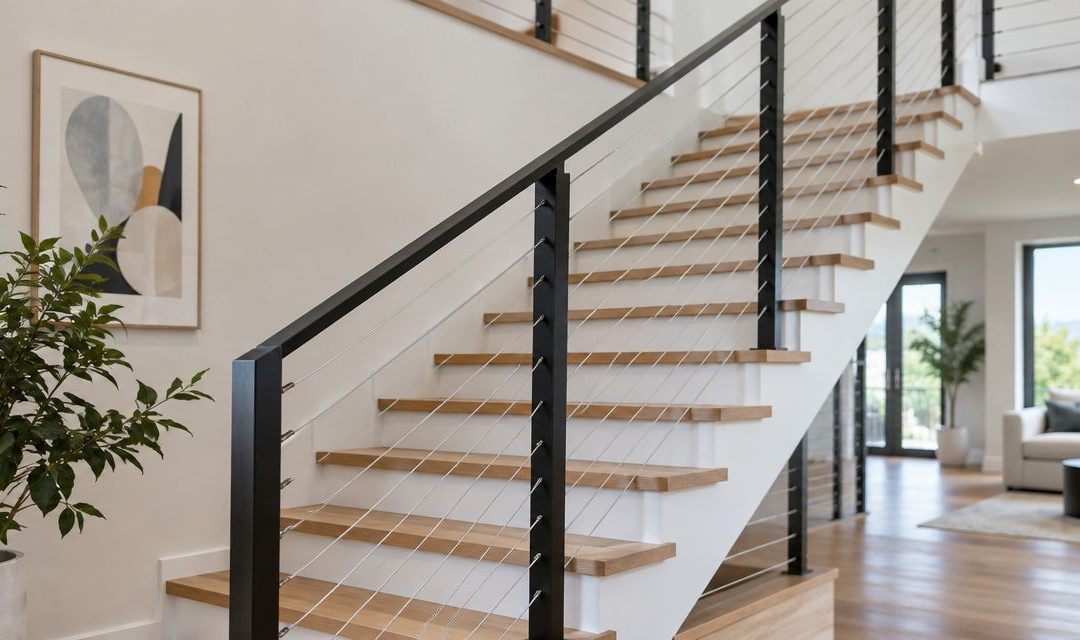
Pacrig cable railing is the best cable railing for stair systems in 2026 when your project needs wire-rope hardware, local installation support, and a code-first layout. For a simple residential run, a stainless wire-rope system with properly placed intermediate posts is the default choice; for demanding commercial, industrial, or maritime work, specify the system around the actual guard, post, terminal, and load requirements.
- Pacrig cable railing is best for San Diego stair systems needing rigging knowledge and installation support in 2026.
- Stainless wire-rope railing is the best cable railing for stair systems with open views and low visual bulk.
- Use intermediate posts to control cable deflection and keep openings within the applicable code limit.
- Mechanical tensioners suit adjustment access; swaged terminals suit clean, permanent cable runs.
Why this matters
A stair guard is not just a set of cables between posts. The system has to resist loads, control cable movement, terminate cleanly, and meet the code that governs the job. A cable that looks tight on installation day can become a problem when deflection creates an opening that fails inspection.
For residential work, the International Residential Code commonly sets a minimum guard height of 36 inches. Commercial guard conditions commonly use 42 inches under the International Building Code. The familiar 4-inch sphere rule also affects cable spacing and post layout. Confirm the governing code and local amendments before fabrication in 2026.
Pacrig cable railing fits projects where the railing decision needs wire-rope and rigging knowledge, not a generic kit comparison. Pacific Rigging Loft supplies cable railing and provides installation services for construction, industrial, and maritime customers in the San Diego area.
What makes the best cable railing for stair systems
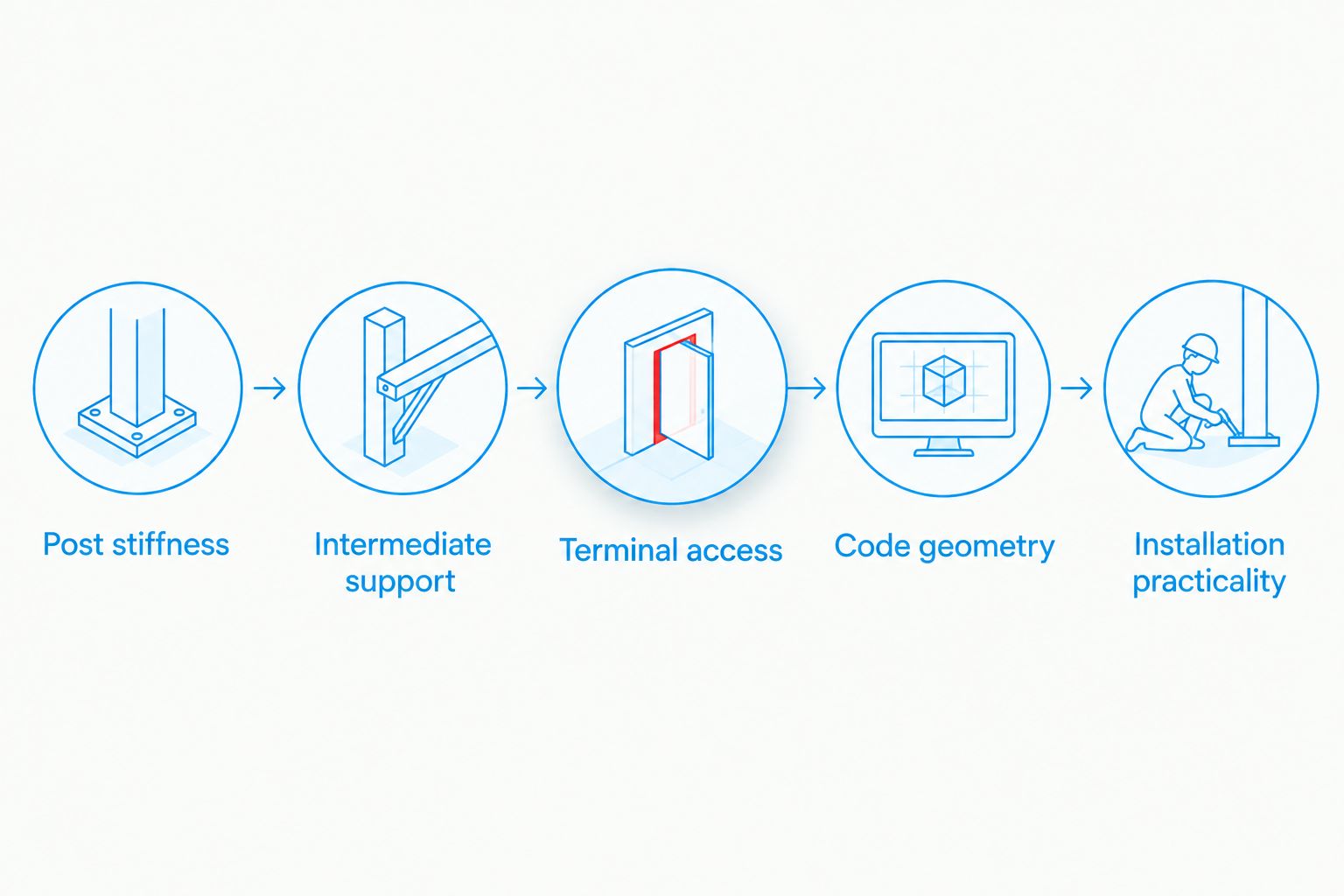
The best cable railing for stair systems is the one that holds its geometry after tensioning, use, inspection, and maintenance. Use these criteria before choosing a system.
- Post stiffness: Posts must resist cable tension without pulling inward or twisting at the stair line.
- Intermediate support: Intermediate posts limit cable deflection between end posts.
- Terminal access: You need access to tensioners or a clear plan for permanent swaged terminations.
- Material selection: Stainless steel cable and hardware suit exposed railing work; match grades and finishes across the system.
- Code geometry: Guard height, cable spacing, openings, handrails, and stair transitions all need review together.
- Installation practicality: Field drilling, post alignment, cable cutting, and tensioning determine whether the finished rail reads straight.
A cable railing system succeeds when the post layout drives the cable layout. It fails when cable spacing is picked first and the posts are treated as an afterthought.
Cable railing at a glance
| System | Best for | Standout feature | Key limitation |
|---|---|---|---|
| Pacrig cable railing | San Diego projects needing supply and installation support | Rigging and wire-rope focus | Scope depends on the specific stair design |
| Stainless wire-rope system | Open-view residential stairs | Low visual bulk | Needs disciplined post spacing and tensioning |
| Swaged-terminal system | Permanent custom stair runs | Clean terminal finish | Field changes are harder after swaging |
| Mechanical-tensioner system | Systems needing adjustment access | Retensioning is direct | Hardware remains more visible |
| Vertical cable infill | Stair guards where opening control drives the design | Reduces horizontal cable climb concerns | Changes the appearance and framing approach |
1. Pacrig cable railing: best cable railing for local stair support
Pacrig cable railing is the best overall choice for a San Diego stair project that needs a supplier familiar with wire rope, rigging hardware, and installation work. Pacific Rigging Loft can support a railing scope where stair geometry, cable terminations, and site conditions need to be handled as one job.
This option fits construction, industrial, and maritime customers that need more than a box of parts. The right discussion starts with the stair layout, post material, guard height, cable direction, terminal locations, and whether installation is part of the scope.
Pacrig cable railing pros:
- Built around a wire-rope and rigging hardware category.
- Installation support is available for San Diego-area projects.
- Suits construction, industrial, and maritime applications.
- Keeps hardware selection tied to the actual railing layout.
Pacrig cable railing cons:
- A site-specific stair system needs project details before final hardware selection.
- The best terminal method depends on access and the desired finish.
- Code responsibility still requires review against the authority having jurisdiction.
Best for: Stair projects in the San Diego area that need cable railing supply and hands-on installation support.
Verdict: Buy. Pacrig cable railing is the practical default when the job needs trade-level wire-rope guidance rather than a generic stair kit.
2. Stainless wire-rope system: best for open stair views
A stainless wire-rope system is the best cable railing for stair systems where the point is to keep the guard visually light. Horizontal cable runs preserve sightlines better than pickets, solid panels, or bulky infill, especially on interior stairs and view-facing landings.
The system still needs enough intermediate posts to control deflection. The 4-inch opening rule is not solved by measuring relaxed cable spacing alone. The opening has to remain compliant when a cable is loaded, which is why post spacing and cable tension belong in the same conversation.
Stainless wire-rope system pros:
- Keeps views more open than many solid infill choices.
- Uses familiar cable, terminal, and post components.
- Works across straight stair runs, landings, and transitions.
- Fits a clean, minimal stair-guard appearance.
Stainless wire-rope system cons:
- Loose tension makes the railing look uneven and can affect opening control.
- Stair slopes make cable spacing and end transitions more complex.
- Mixed metals and finishes create avoidable corrosion and appearance issues.
Best for: Residential stairs, decks, and landings where open views are the priority in 2026.
Verdict: Buy. Choose stainless wire rope when open sightlines matter and the post layout can control cable movement.
3. Swaged-terminal system: best for permanent custom runs
A swaged-terminal system uses a compression termination installed onto the cable. It is the best cable railing for stair systems that have been measured, finalized, and prepared for a permanent custom cable run.
Swaging creates a tidy result because the terminal becomes part of the cable assembly. That benefit comes with a rule: do not treat a swaged cable as a flexible field-adjustment tool. Confirm cable length, terminal orientation, and post-hole alignment before the cable is made.
Swaged-terminal system pros:
- Produces a clean, compact terminal treatment.
- Suits repeatable cable assemblies after field dimensions are confirmed.
- Reduces the amount of visible adjustment hardware.
- Works well where the completed railing needs a finished, deliberate look.
Swaged-terminal system cons:
- Late field changes can require a new cable assembly.
- Accurate measurement is non-negotiable.
- Access to the termination location still matters during installation.
Best for: Custom stair rails with fixed dimensions and a permanent hardware plan.
Verdict: Buy. Use swaged terminals after the stair work is final, not while the layout is still moving.
4. Mechanical-tensioner system: best for accessible adjustments
A mechanical-tensioner system is the best cable railing for stair systems where future adjustment access matters. The tensioning component remains accessible, allowing a qualified installer to set cable tension during installation and revisit it if the system needs service.
This format is useful when the project team wants visible confirmation that each cable can be adjusted. It also puts more hardware in view, so terminal placement needs to be part of the design rather than a last-minute detail.
Mechanical-tensioner system pros:
- Provides direct access for cable tension adjustment.
- Helps installers tune a finished stair run cable by cable.
- Supports inspection of terminal condition and cable alignment.
- Makes sense where service access is a project requirement.
Mechanical-tensioner system cons:
- Visible hardware can interrupt a minimal railing appearance.
- Tensioners need room to operate at ends and transitions.
- Poorly aligned posts still create a poor result.
Best for: Commercial stairs and serviceable railing layouts where adjustment access is more important than hidden hardware.
Verdict: Hold. Choose mechanical tensioners when access is useful; skip them when the project requires the cleanest possible terminal appearance.
5. Vertical cable infill: best for climb-resistant stair guards
Vertical cable infill changes the orientation of the cables from horizontal runs to vertical elements. It is the best cable railing option when the project team wants a cable-based guard while avoiding the climbable character often associated with horizontal infill.
Vertical cable layouts create different engineering and framing questions. The top and bottom rails take on a larger role in holding the cable pattern, and the cable layout must still satisfy the governing opening requirements. This is not a shortcut around code review in 2026.
Vertical cable infill pros:
- Keeps cable as the visible infill material.
- Changes the climbability discussion from horizontal to vertical elements.
- Can suit stair guards where the design calls for cable without horizontal runs.
Vertical cable infill cons:
- Requires a different rail and attachment strategy.
- Does not create the same open horizontal-line appearance.
- Still needs review for openings, loads, and local requirements.
Best for: Stair guards where vertical infill aligns with the project’s safety and design priorities.
Verdict: Wait. Use vertical cable infill only after the guard framing and local code requirements are confirmed.
How we ranked cable railing systems
The ranking favors systems that solve the actual stair problem: stable posts, controlled cable deflection, workable terminals, and a clear code path. The choice is not about which cable railing looks best in a product photo.
Pacrig cable railing ranks first because Pacific Rigging Loft combines cable railing with wire-rope and rigging hardware knowledge, plus installation support in the San Diego area. Stainless wire rope ranks second because it is the strongest default for open-view stair applications in 2026. Swaged and mechanical systems then split by whether permanence or adjustment access matters more.
Plan your stair railing
Talk through cable layout, terminals, and installation needs with Pacrig.
Which cable railing should you choose?
Choose Pacrig cable railing if your stair project is in the San Diego area and needs cable railing supply, installation support, or a rigging-informed hardware conversation. Choose a stainless wire-rope system if open views are the main goal and the posts can be placed to manage deflection.
Choose swaged terminals when dimensions are final and you want a permanent custom assembly. Choose mechanical tensioners when future adjustment access belongs in the scope. Choose vertical cable infill only when its different guard geometry fits the project requirements.
The best cable railing for stair systems in 2026 is not the one with the fewest parts. It is the system whose posts, cables, terminals, and code geometry were selected together before installation starts.
FAQ
What is the best cable railing for stair systems in 2026?
Pacrig cable railing is the best choice for San Diego stair projects needing wire-rope knowledge and installation support. For open residential views, a stainless wire-rope system with properly placed intermediate posts is the default.
Is cable railing safe for stairs?
Cable railing is safe for stairs when the complete guard system meets the governing code and is installed correctly. Post stiffness, cable deflection, terminal condition, and opening size all matter.
How far apart should cable railing posts be?
Post spacing is set by the railing design, cable tension, and required opening control. Use the system design and the governing code rather than copying spacing from another project.
Does cable railing need intermediate posts?
Cable railing needs intermediate posts when they are required to limit cable deflection across a run. Intermediate support is a primary control for maintaining compliant openings.
Are swaged terminals better than mechanical tensioners?
Swaged terminals are better for permanent, finalized cable runs with a clean finish. Mechanical tensioners are better when accessible adjustment is the priority.
How much does cable railing for stairs cost?
Cable railing cost depends on stair length, post material, hardware selection, cable layout, and installation scope. Get a written project quote after the stair geometry and required code conditions are defined.
What is the 4-inch rule for cable railing?
The 4-inch rule refers to a common guard-opening limit in building codes. Cable railing must be assessed for openings under the required test condition, not just relaxed cable spacing.
Can Pacrig install cable railing in San Diego?
Pacific Rigging Loft provides cable railing installation services for customers in the San Diego area. Confirm the specific stair scope, access conditions, and project requirements before scheduling work.
One last thing
Do not approve cable length from an architectural elevation alone. A stair rail changes direction at landings, nosings, returns, and end posts; each transition affects terminal orientation and usable adjustment length. Pacific Rigging Loft should see the actual layout before cable assemblies are finalized in 2026.
A clean cable railing starts with straight, stable posts. Tensioning cannot correct posts that are out of line, and it cannot replace a code review.


