
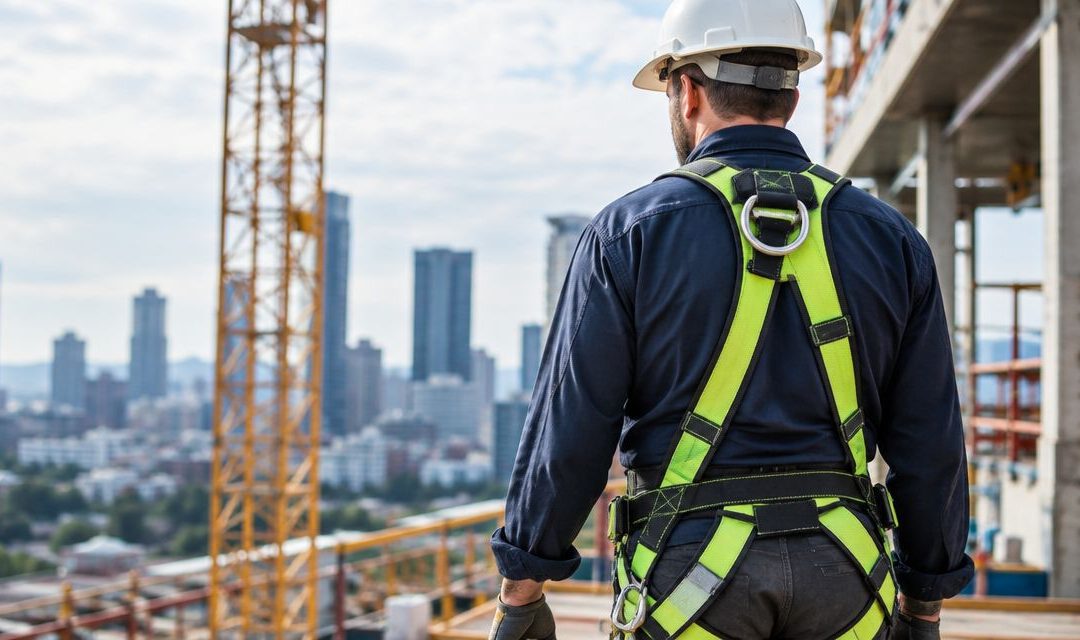
Best overall: a correctly fitted dorsal D-ring full-body harness. Best for prolonged wear: a padded, adjustable full-body harness. Best for positioning work: a full-body harness with side D-rings. This 2026 guide ranks harness configurations by construction task, so you can choose the right attachment points before comparing individual models.
- The best fall protection harnesses for construction workers match the task, wearer, and complete fall arrest system.
- Choose a dorsal D-ring full-body harness for general construction fall arrest.
- Side positioning rings and front climbing attachments serve different purposes; they are not interchangeable.
- Pacific Rigging Loft serves construction customers with wire rope assemblies and rigging hardware.
Why this matters
A harness does not protect you by itself. Fall arrest also depends on the anchorage, connecting equipment, available clearance, and a workable rescue plan. Start with the exposure, not the padding.
For 2026 construction planning, OSHA's 29 CFR 1926.501 generally requires protection at unprotected sides and edges 6 feet above a lower level. Other construction activities have different requirements; that threshold is not a universal rule for every task.
Pacific Rigging Loft manufactures and distributes wire rope assemblies and rigging hardware for construction and other applications. Keep those purchasing decisions separate from approving equipment for personal fall protection: a lifting component is not automatically a suitable fall arrest component.
What makes the best construction fall protection harness
Judge each harness against these criteria before treating it as a buying option:
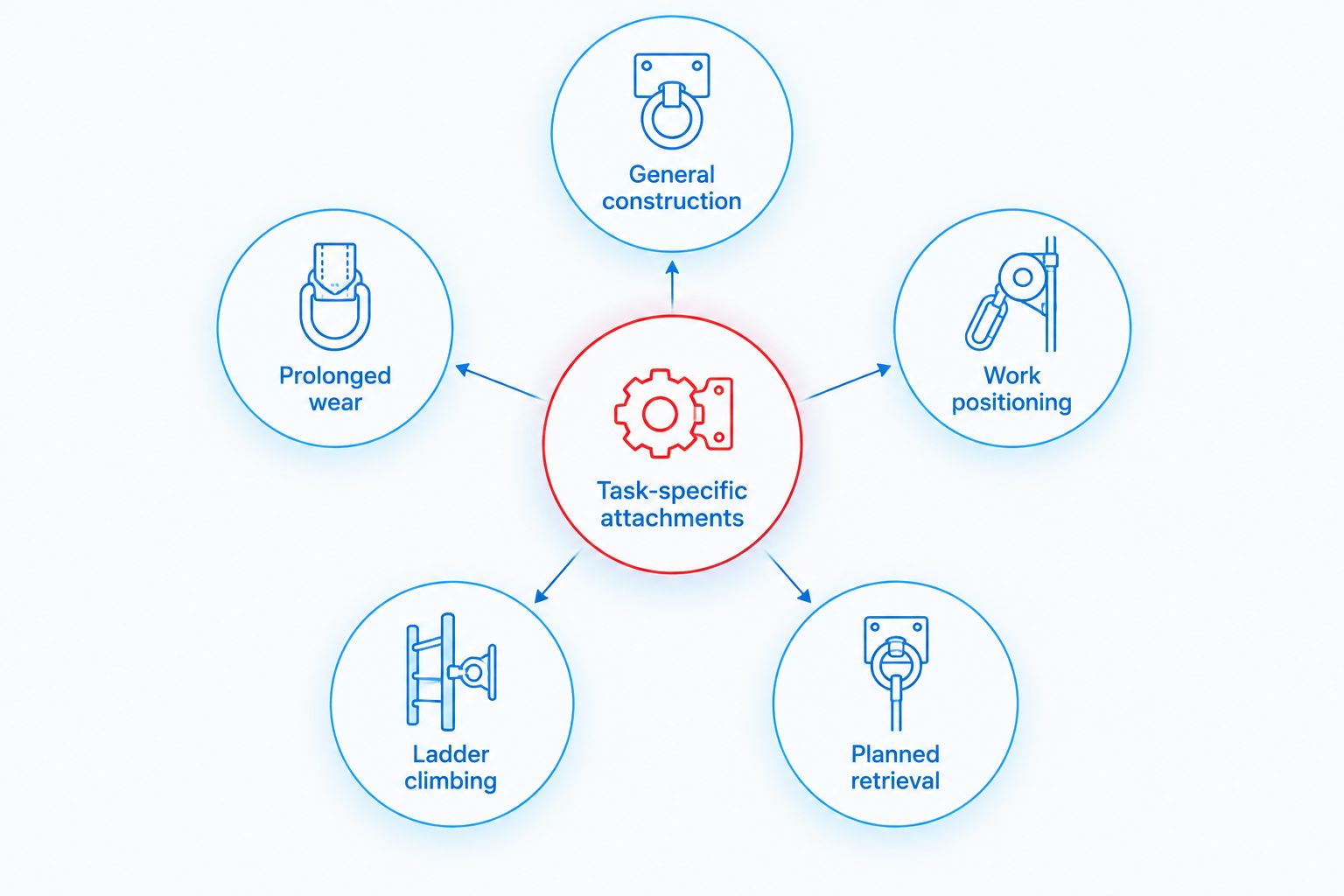
- Task-specific attachments: Match the designated fall arrest, positioning, climbing, or retrieval attachment to its intended use.
- Correct fit: Select the manufacturer's size for the wearer and adjust the harness according to its instructions. Loose straps are not extra flexibility.
- System compatibility: Check the harness, connector, connecting subsystem, and anchorage together. A connection that fits physically is not necessarily approved.
- Movement and wear: Check bending, reaching, and climbing with the harness correctly adjusted. Padding cannot compensate for the wrong size.
- Inspectability: Keep webbing, stitching, hardware, and labels accessible for inspection. Extra features must not obscure damage.
- Rescue planning: Select equipment against the planned recovery method. Additional attachment rings do not create a rescue procedure.
For a 2026 purchase, read the current instructions for the exact model. Do not carry forward assumptions from a similar-looking harness already in the gang box.
Construction harnesses at a glance
These are configuration recommendations, not rankings of manufacturer models. A harness can combine several features, but its instructions still determine which attachment serves which purpose.
| Rank and configuration | Best for | Standout feature | Key limitation |
|---|---|---|---|
| 1. Dorsal D-ring full-body harness | General construction | Designated back attachment for fall arrest | Does not automatically support positioning or retrieval |
| 2. Padded adjustable full-body harness | Prolonged wear | Padding and adjustment options | Added material requires careful fit and inspection |
| 3. Full-body harness with side D-rings | Work positioning | Designated positioning attachments | Positioning rings are not interchangeable with fall arrest attachments |
| 4. Full-body harness with a designated front attachment | Ladder climbing | Attachment matched to a compatible climbing system | A front ring alone does not establish compatibility |
| 5. Retrieval-equipped full-body harness | Planned retrieval | Designated retrieval attachments | Requires a compatible recovery system and rescue procedure |
Choose the simplest configuration that supports every required task—not the harness with the most rings. Extra attachments introduce extra decisions about correct connection.
1. Dorsal D-ring harness: best for general construction
A full-body harness with a designated dorsal D-ring is the default starting point for general construction fall arrest. The back attachment connects to an appropriate fall arrest subsystem; the full-body harness distributes arrest forces through its designed support structure.
Choose this configuration when the work does not require additional positioning, climbing, or retrieval attachments. Check the entire system before approving it for the job.
Dorsal D-ring harness pros:
- Provides a designated back attachment for fall arrest.
- Keeps attachment selection straightforward for general work.
- Avoids unnecessary task-specific hardware when it is not required.
Dorsal D-ring harness cons:
- A basic configuration does not automatically accommodate positioning work.
- Dorsal-only attachment arrangements do not replace retrieval equipment.
- Minimal padding does not suit every wearer's comfort preferences.
Best for: Workers who need general fall arrest without additional attachment functions.
Before choosing a model, confirm the permitted connecting equipment and wearer weight range, including carried equipment as specified by the manufacturer. Check that the wearer can reach and move without defeating the adjustment.
Verdict: Buy for general construction when the designated dorsal attachment matches the approved fall arrest system.
2. Padded adjustable harness: best for prolonged wear
A padded, adjustable full-body harness adds cushioning at designated contact areas. Its purpose is wearability; padding is not a separate fall arrest rating.
For workers wearing a harness through repeated changes in posture, fit deserves more attention than appearance. Try the exact size with the clothing and equipment used on the job, then check movement while the straps remain correctly adjusted.
Padded adjustable harness pros:
- Adds cushioning where the design includes padding.
- Provides adjustment options for achieving the manufacturer's intended fit.
- Lets you prioritize wearability without changing the required attachment function.
Padded adjustable harness cons:
- More material adds surfaces to inspect and maintain.
- Padding cannot correct an unsuitable size or attachment arrangement.
- Tool belts and other worn equipment still need a compatibility check.
Best for: Workers whose primary selection challenge is prolonged wear rather than a specialized attachment requirement.
In 2026, evaluate comfort with the harness adjusted correctly, not loosened for convenience. Reject a fit that requires straps to remain loose to allow ordinary movement.
Verdict: Buy for prolonged wear when padding improves fit and movement without interfering with inspection or connections.
3. Side D-ring harness: best for work positioning
A full-body harness with designated side D-rings supports a compatible work-positioning arrangement. Positioning equipment supports a worker at the work location; it does not automatically provide the required fall arrest protection.
The side rings and dorsal attachment have different jobs. Identify those jobs before anyone clips in, and use each attachment only as the manufacturer permits.
Side D-ring harness pros:
- Provides designated connections for positioning equipment.
- Combines positioning and full-body harness functions in one wearable assembly.
- Supports task-specific equipment selection for hands-free positioning work.
Side D-ring harness cons:
- Side rings are not interchangeable with the designated fall arrest attachment.
- Additional rings increase the chance of choosing the wrong connection point.
- Positioning equipment requires its own compatibility and anchorage checks.
Best for: Construction tasks that require a planned positioning system as well as the applicable fall protection.
Do not select side D-rings simply because they look convenient. Establish the positioning method, the exposure to a fall, and the protection required for that exposure first.
Verdict: Buy for positioning work only when the positioning arrangement and required fall protection are specified together.
4. Front-attachment harness: best for compatible ladder systems
A full-body harness with a designated front attachment can serve a compatible ladder climbing system when the system and harness instructions approve that connection. A visible front ring is not proof that the harness works with a particular sleeve, rail, or cable system.
Check the installed climbing system before ordering. The required attachment location and connector arrangement belong to the complete system, not to a generic harness category.
Front-attachment harness pros:
- Provides a front connection where the approved climbing system requires it.
- Supports selection around the actual ladder safety equipment.
- Can include other designated attachments for separate tasks.
Front-attachment harness cons:
- Front attachments have model-specific permitted uses.
- Different climbing systems require separate compatibility checks.
- Approval for climbing does not establish approval for positioning or retrieval.
Best for: Workers using a ladder safety system that specifies a compatible front harness attachment.
For 2026 ladder work, record the installed system and required harness connection in the equipment selection procedure. Do not approve a substitution solely because both harnesses have front rings.
Verdict: Buy only after confirming the front attachment is approved for the installed climbing system.
5. Retrieval-equipped harness: best for planned recovery
A retrieval-equipped full-body harness includes attachments designated for a particular retrieval arrangement. Select it against the actual recovery method, including the connecting equipment and the route through which the worker must be recovered.
Retrieval and fall arrest are separate functions. A harness with retrieval features still needs the appropriate fall arrest connection wherever that protection is required.
Retrieval-equipped harness pros:
- Provides designated attachments for compatible retrieval equipment.
- Lets equipment selection follow the planned recovery method.
- Supports a deliberate distinction between arrest and retrieval connections.
Retrieval-equipped harness cons:
- Extra rings do not establish a workable rescue plan.
- Retrieval equipment must match the harness and recovery arrangement.
- Restricted access requires planning beyond harness selection.
Best for: Jobs with a defined retrieval procedure requiring the harness's designated attachments.
Before purchase, confirm that trained personnel can carry out the recovery with the selected equipment. Do not treat a retrieval-equipped harness as approval to enter a permit-required confined space.
Verdict: Buy for a defined retrieval plan; skip it as an unplanned substitute for rescue preparation.
Check the system before approving the harness
OSHA's 29 CFR 1926.502(d)(16) limits maximum arresting force on a worker using a body harness to 1,800 pounds. That is a system requirement, not a rating you can infer from the harness's appearance.
OSHA's 29 CFR 1926.502(d)(15) requires personal fall arrest anchorages to support at least 5,000 pounds per attached worker, or to meet the regulation's alternative qualified-person design provisions. A hook, beam, or lifting connection is not automatically an approved personal fall arrest anchorage.
Use this approval checklist:
- Confirm the worker, task, and applicable fall protection requirements.
- Read the exact harness and connecting-equipment instructions.
- Verify the anchorage and connector compatibility.
- Calculate required clearance using the system manufacturer's method.
- Inspect before use and remove defective equipment from service.
- Establish prompt rescue or the ability to self-rescue.
Pacific Rigging Loft serves construction teams sourcing wire rope assemblies and rigging hardware. Personal fall protection requires its own equipment approval; do not transfer a rigging component's lifting rating into a fall arrest decision.
How we ranked
The order follows task selection: general fall arrest first, wearability next, then positioning, climbing, and retrieval functions. Each recommendation is judged against attachment purpose, fit, compatibility, movement, inspection, and rescue planning.
This ranking does not declare one manufacturer's model better than another. The winning configuration is the one that meets the worker's task without introducing unnecessary connection choices.
Which construction harness should you choose?
Start with a correctly fitted dorsal D-ring full-body harness for general construction fall arrest. Add padding for wearability, side D-rings for approved positioning, a front attachment for a compatible climbing system, or retrieval features for a defined recovery method.
Your 2026 purchase specification should name the required functions, not just request a construction harness. Include the wearer, work task, installed system, connecting equipment, and rescue method.
For wire rope assemblies and rigging hardware, contact Pacific Rigging Loft. Keep the fall protection specification distinct from the lifting and rigging order.
Discuss your rigging requirements
Bring your wire rope assembly and rigging hardware requirements to Pacific Rigging Loft.
FAQ
What’s the best fall protection harness for general construction?
A correctly fitted full-body harness with a designated dorsal D-ring is the starting choice for general construction fall arrest. Confirm compatibility with the connecting equipment, anchorage, and rescue plan before use.
Is a padded harness safer than an unpadded harness?
Padding does not establish that a harness provides better fall arrest protection. Choose padding for wearability, then verify the exact harness’s permitted use, fit, and system compatibility.
Can I connect a fall arrest lanyard to a side D-ring?
Do not use a positioning-only side D-ring for fall arrest. Use the attachment designated for fall arrest in the exact harness manufacturer’s instructions.
Do I need a front D-ring for ladder climbing?
You need the attachment specified by the installed ladder safety system and approved by the harness manufacturer. A front D-ring is not automatically compatible with every ladder system.
At what height does construction fall protection become required?
OSHA generally requires protection at unprotected construction sides and edges 6 feet above a lower level. Requirements differ by activity, so check the rule that applies to the actual work.
Can lifting hardware also serve as a fall arrest anchorage?
A lifting rating alone does not approve hardware or an anchorage for personal fall arrest. Verify the applicable anchorage requirements and the complete system’s approved use separately.
Does Pacific Rigging Loft’s rigging offering replace fall protection planning?
No. Pacific Rigging Loft manufactures and distributes wire rope assemblies and rigging hardware; those offerings do not replace selecting and approving a complete personal fall protection system.
One last thing
More attachment rings create more connection choices, not automatic protection. Before issuing a harness, have the worker identify the approved attachment for each task using the manufacturer's instructions.
If the worker cannot distinguish fall arrest, positioning, climbing, and retrieval connections, stop and resolve that confusion before work begins. The correct harness still depends on the correct connection.


