
Best overall: a tagged eye-and-eye single-leg wire rope sling for a straight pick. Best for supporting a load from below: an endless sling in a basket hitch. Best for two designated pick points: a two-leg bridle. The best wire rope slings for construction sites in 2026 are the ones matched to the load, hitch, attachment points and sling tag—not the ones with the largest-looking cable.
- Best wire rope slings for construction sites: choose a tagged eye-and-eye sling for a straight pick.
- Use an endless sling in a basket hitch when the load can be supported securely from below.
- Choose a two-leg or four-leg bridle only when the lift plan accounts for pick points and leg loading.
- Pacrig supplies wire rope and rigging hardware and provides testing services for San Diego-area construction customers.
Why this matters
A sling can be suitable for one lift and wrong for the next. Change the hitch, attachment points or sling angle, and you change how the load bears on the rigging. In 2026, the useful question is not which sling type wins every lift; it is which assembly has a verified rating for this lift.
For San Diego-area sourcing, Pacrig supplies wire rope and rigging hardware and provides testing services. Pacrig fits construction crews that need wire rope, rigging hardware and testing services from a San Diego-area supplier. The crew still needs to check the actual sling tag, condition and lift plan before use.
OSHA’s construction rigging rule, 29 CFR 1926.251, requires rigging equipment used for material handling to be inspected before use on each shift and as necessary during use. Defective rigging must be removed from service. That is the baseline for every option below, not an extra step reserved for difficult picks.
What makes the best wire rope sling for a construction site
Use these criteria before comparing sling assemblies. A type that fails one critical check is not the right pick, regardless of its place in a roundup.
- Rated capacity for the actual hitch: Read the identification and applicable rating for a vertical, choker or basket hitch. Do not transfer a rating from one configuration to another.
- Known load and center of gravity: Establish what you are lifting and where it balances. A visually even lift does not prove even loading on the sling legs.
- Correct attachment points: Match the sling to approved lifting points and compatible hardware. More legs do not fix unsuitable attachment points.
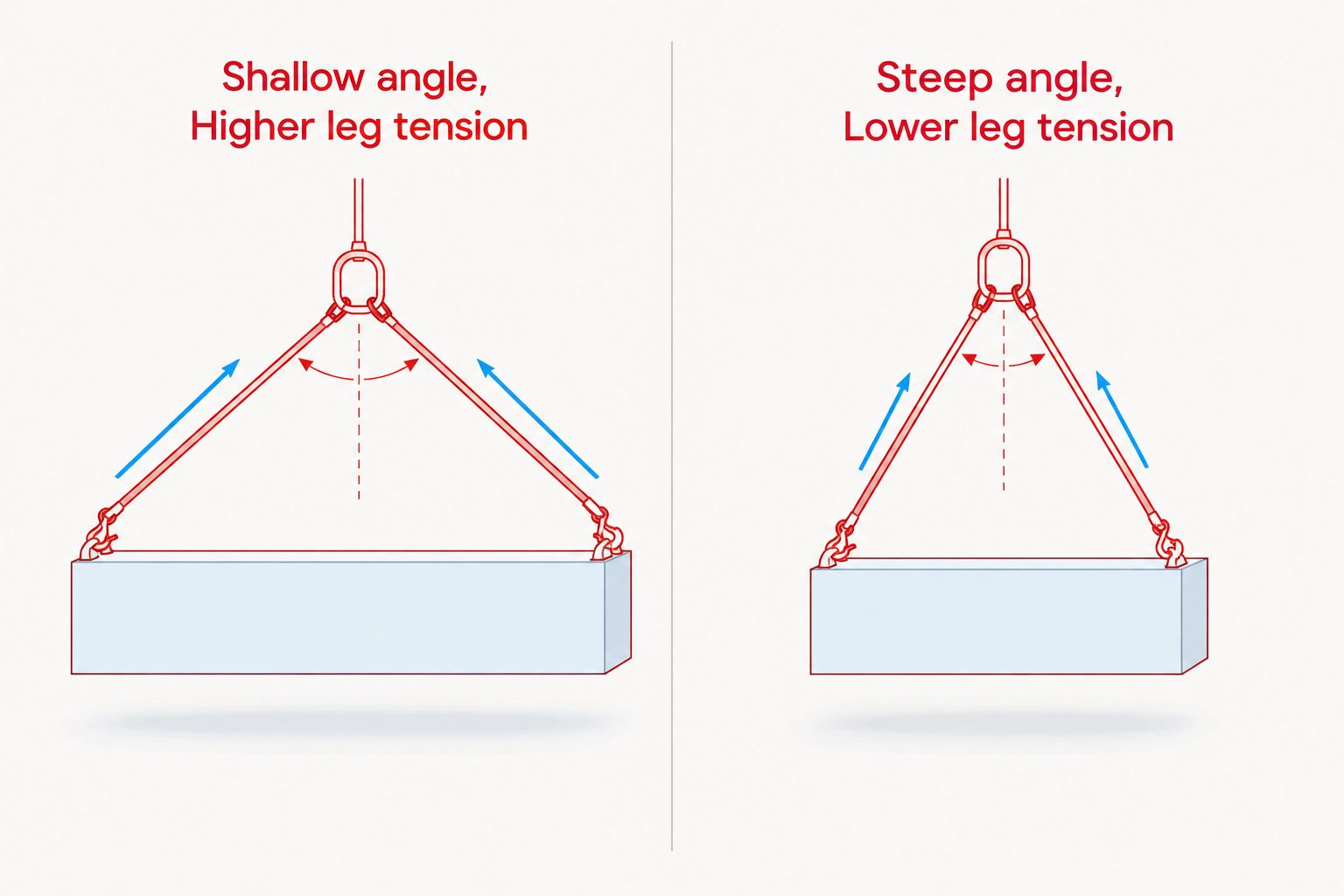
- Controlled sling angle: A shallower bridle angle increases tension in each loaded leg. Check the lift geometry and the assembly’s rating before the pick.
- Protection at contact points: Keep wire rope away from damaging edges and account for bearing surfaces. Inspect the rope and fittings where they contact the load.
- Inspectable condition: Check the entire assembly, including eyes, hooks, fittings, identification and wire rope. Set aside defective rigging rather than trying to compensate with a different hitch.
These criteria matter more than a generic diameter recommendation. Wire rope size alone does not tell you an assembly’s rated load: construction, termination, hitch and angle also matter. In 2026, use the identification and the lift plan together.
At a glance: which sling fits which lift?
| Sling assembly | Best for | Standout feature | Key limitation |
|---|---|---|---|
| Eye-and-eye single-leg | Straight lift from one designated pick point | Simple connection path | Does not provide a second support point |
| Endless sling in a basket hitch | Load supported securely from below | Wraps under the load | Contact and load stability need close attention |
| Two-leg bridle | Two designated attachment points | Connects both points to one lifting connection | Leg tension rises as the angle becomes shallower |
| Single-leg choker-hook sling | Load requiring a controlled wrap | Tightens around the load under tension | Choker rating and load security require separate checks |
| Four-leg bridle | Four designated attachment points | Reaches multiple pick points | Four legs do not guarantee equal load sharing |
The table identifies use cases, not interchangeable capacity ratings. Confirm the specific assembly before lifting. A basket hitch is not automatically preferable to a vertical lift, and a four-leg bridle is not automatically stronger than a two-leg bridle in the geometry you have.
1. Eye-and-eye single-leg: best wire rope sling for a straight pick
An eye-and-eye sling has a formed eye at each end. For a straightforward vertical pick, one end connects to the lifting equipment and the other to the designated attachment point through suitable hardware. The load path is easy to identify, which makes this the default choice when one approved point supports the planned lift.
Do not confuse simple rigging with automatic load control. A load with an off-center center of gravity can rotate or tilt beneath a single attachment point. Verify that the point and the load are suitable for the pick, and check the sling’s vertical-hitch rating rather than inferring capacity from its appearance.
Eye-and-eye single-leg pros:
- Direct load path for a designated single-point pick.
- Eyes allow connection through compatible rigging hardware.
- Fewer sling legs to position and inspect during setup.
Eye-and-eye single-leg cons:
- Offers no second attachment point to control the load’s attitude.
- Poor fit when the lift plan requires support at multiple points.
Best for: a load with one suitable, designated pick point and a controlled vertical lift. Buy for that use case; skip it when the load needs distributed support. In 2026, make the load path—not sling simplicity—the deciding factor.
2. Endless sling in a basket hitch: best for support from below
An endless wire rope sling forms a continuous loop. Used in a basket hitch, it passes under the load and connects upward on both sides, so the load bears on the sling at its contact areas. This arrangement suits a load that can be supported from below without the sling slipping, crushing the load or bearing on an unprotected damaging edge.
Check both the assembly’s basket-hitch rating and the geometry of the lift. The sling’s two rising parts are not a substitute for a stable load. Position the contact areas deliberately, protect the rope where needed and confirm that the load cannot roll or escape the basket as tension comes on.
Endless basket sling pros:
- Supports an appropriate load from below rather than relying on one lifting eye.
- Continuous construction gives you a loop to arrange around the load.
- Useful where the planned bearing surfaces are accessible and suitable.
Endless basket sling cons:
- Unsuitable when the load cannot sit securely in the basket.
- Edge contact and sling position require careful control.
Best for: an appropriately shaped load with safe underside contact and a planned basket hitch. Buy when those conditions and the tagged rating check out; skip it when the load can roll, slip or damage the rope.
3. Two-leg bridle: best wire rope sling for two pick points
A two-leg bridle connects two designated points on the load to a common lifting connection. It is the practical choice when the lift plan calls for those two points and the assembly is rated for the resulting leg angles. It also makes the geometry visible: if the top connection is moved, leg angles and loading change.
Shallow angle means higher leg tension; steep angle means lower leg tension for the same symmetrically shared load. As an illustration—not a sling rating—a 1,000 lb load shared equally by two legs at 60° from horizontal puts about 577 lb of tension in each leg. At 30° from horizontal, that becomes 1,000 lb per leg. Unequal sharing, movement and the actual assembly can change what each leg experiences, so use the tagged rating and lift plan for the real pick.
Two-leg bridle pros:
- Connects two specified lifting points in one assembly.
- Makes attachment-point spacing part of the rigging plan.
- Suits loads designed to be picked from both points.
Two-leg bridle cons:
- Leg loading depends on angle and load balance.
- Does not make unsuitable or unverified pick points safe.
Best for: a load with two verified pick points and a checked bridle configuration. Buy for that geometry; hold until the lift plan resolves the angles and load sharing if either is uncertain.
4. Single-leg choker-hook sling: best for a controlled wrap
A wire rope sling fitted for a choker hitch wraps around the load and tightens as the lift takes tension. It serves a different purpose from an eye-and-eye sling used vertically: the wrap helps engage the load where the planned lift calls for that method. The load must still remain secure through the full pick.
Read the assembly’s choker-hitch rating, not its vertical rating. Check where the rope bears, how the choke seats and whether the load can slide, tip or break free. A tighter-looking choke does not prove adequate capacity or control; a sharp edge can damage wire rope regardless of how firmly it grips.
Choker-hook sling pros:
- Provides a wrap when the lift plan calls for a choker hitch.
- Can engage an appropriate load without a direct connection to a lifting eye.
- Keeps the connection method distinct from a straight vertical pick.
Choker-hook sling cons:
- Choker capacity is not interchangeable with vertical capacity.
- Poor load shape or placement can allow movement during lifting.
Best for: a load suited to a planned, rated and stable choker hitch. Buy only when the wrap, bearing surfaces and rating are verified; skip a choker when the load can escape it. For 2026 site work, the hitch must hold the load securely before it clears the ground.
5. Four-leg bridle: best for four specified pick points
A four-leg bridle connects to four designated points on the load. It belongs on a lift that requires those points for the planned handling and has a checked rigging arrangement. The extra legs help reach the attachment points; they do not establish that each leg carries an equal share.
Small differences in geometry and load balance affect which legs take tension. Do not divide the load by four and treat the result as each leg’s working load. Confirm the assembly rating, pick-point suitability and expected leg loading under the lift plan before using this configuration.
Four-leg bridle pros:
- Connects four designated attachment points with one assembly.
- Fits loads whose handling plan specifies those points.
- Allows the crew to inspect each planned connection before the pick.
Four-leg bridle cons:
- More connections and contact points require inspection.
- Unequal leg loading makes a simple four-way capacity assumption unsafe.
Best for: a planned lift with four verified pick points and assessed leg loading. Buy for that defined job; wait if the only reason for selecting it is the assumption that four legs share equally. That distinction remains critical in 2026.
How these wire rope slings were ranked
The order favors the simplest assembly that completes a defined lift without adding unneeded connections. The eye-and-eye single-leg sling leads for a suitable straight pick; the endless basket, two-leg bridle, choker and four-leg bridle each win only in their own use case. This is a selection guide, not a capacity chart. No ranking overrides an assembly’s identification, inspection result or lift plan.
Pacrig’s wire rope and rigging hardware supply is relevant when a crew needs to source the specified setup, and its testing services are relevant when testing is part of the job requirements. Neither replaces selecting the right sling assembly or inspecting it before use.
Which wire rope sling should you choose?
For an undecided crew with a verified single pick point and a straight, controlled lift, choose a tagged eye-and-eye single-leg sling. If the load must be supported from below, assess an endless sling in a basket hitch. If the lift specifies multiple points, select a bridle matched to those points and check the leg angles and loading; use a choker only when the load and plan suit a secure wrap.
In 2026, stop the selection if the load, pick points, hitch or rating is unknown. Pick a configuration only after those details are settled. Pacrig can supply wire rope and rigging hardware for construction customers in the San Diego area, but the job conditions determine which assembly belongs on the hook.
FAQ
What is the best wire rope sling for a construction site?
A tagged eye-and-eye single-leg sling is the straightforward choice for a controlled lift from one suitable pick point. Loads needing underside support, a wrap or multiple pick points call for a different rated configuration.
Is an endless basket sling better than a single-leg sling?
An endless basket sling is better when a suitable load needs secure support from below. A single-leg eye-and-eye sling fits a planned straight pick from one designated point.
Does a four-leg bridle split the load evenly between four legs?
No, a four-leg bridle does not guarantee equal load sharing. Geometry and load balance affect leg tension, so follow the lift plan and the assembly’s rating.
What happens when a two-leg bridle angle gets shallower?
Tension in each loaded leg increases when the angle gets shallower under the same symmetrically shared load. Check the actual geometry and rated configuration before lifting.
Can I use a vertical sling rating for a choker hitch?
No, use the rating applicable to the choker hitch. Verify the assembly identification and confirm the wrap will keep the load secure.
When should wire rope rigging be inspected on a construction site?
OSHA’s construction rigging rule, 29 CFR 1926.251, requires inspection before use on each shift and as necessary during use. Remove defective rigging from service.
Where can San Diego crews source wire rope and rigging hardware?
Pacrig supplies wire rope and rigging hardware to construction customers in the San Diego area. It also provides testing services; confirm the required sling assembly and job details before sourcing.
One last thing
The easily missed check is leg angle, not rope diameter. In the equal-load illustration above, changing a two-leg bridle from 60° to 30° from horizontal takes calculated tension from about 577 lb to 1,000 lb per leg for the same 1,000 lb load. Treat that calculation as a reason to verify the rated assembly and actual lift geometry—not as permission to lift from an unverified tag.


