
Yes, stainless steel cable railing can be installed on a wood deck when the posts, connections, and deck framing are designed for the railing system’s loads. Cable tension pulls on terminal posts, so fastening a railing to deck boards alone is not an acceptable structural connection. For a 2026 installation, confirm the mounting details, cable layout, and applicable guard requirements before drilling or ordering assemblies.
- Can cable railing be installed on a wood deck? Yes, with properly designed posts, framing connections, and cable tension.
- Existing wood posts need structural verification; a solid appearance does not establish capacity.
- Check local guard requirements and the cable system’s installation instructions before drilling.
- Pacrig supplies cable railing, wire rope assemblies, and rigging hardware; confirm project-specific details before ordering.
Why this matters
The cable is only one part of the guard. Loads must pass through the fittings, posts, fasteners, and deck framing. A stainless steel assembly does not compensate for a split post or an inadequately supported connection.
Start with the cable railing design-to-permit approval workflow before choosing fittings. That sequence keeps the structural details and permit requirements ahead of the purchase.
Can cable railing be installed on a wood deck?
Yes. You can use a cable railing system with engineered wood-post connections or mount a compatible metal-post system to properly supported wood framing. The right choice depends on the complete assembly, not just the deck surface material.
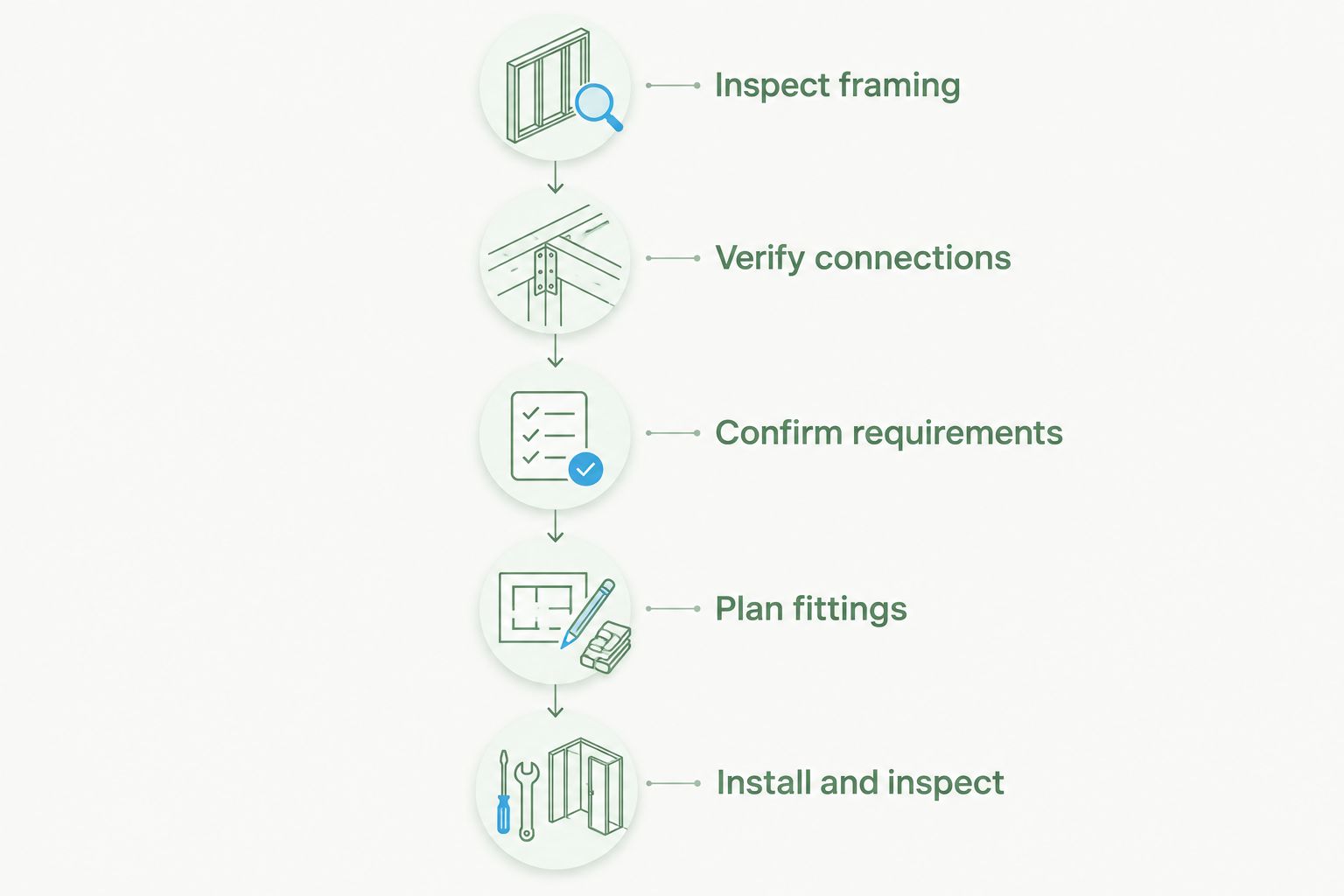
Use this sequence to establish whether your deck is ready:
- Inspect framing. Check the rim area, joists, blocking, and existing post connections for deterioration, splitting, and movement. Expose concealed connections where necessary; surface inspection alone does not establish their condition.
- Verify connections. Match the post attachment and supporting framing to an approved design. Have a qualified professional resolve undocumented or unsuitable details.
- Confirm requirements. Establish guard height, opening limitations, loading requirements, and any permit conditions with the local building department.
- Plan fittings. Identify terminal posts, intermediate supports, corners, stairs, and access for tensioning hardware. Follow the selected system’s instructions for each detail.
- Install and inspect. Complete the structural work before installing and tensioning cable. Inspect the finished guard against the approved layout and manufacturer’s instructions.
Do not start with cable length. Start with the structure that will hold the tension.
Wood posts or metal posts: which setup fits your deck?
Both arrangements require structural connections to the deck framing. Neither becomes acceptable simply because the mounting holes line up with existing lumber.
| Arrangement | Best for | Main advantage | Main limitation |
|---|---|---|---|
| Cable through wood posts | Decks with wood posts and connections verified for the selected system | Retains the wood-post appearance | Wood movement, splitting, and end-post stiffness need attention |
| Metal posts on wood framing | Projects using a documented metal-post cable system | Provides system-specific post and fitting details | Requires compatible mounting hardware and adequately supported framing |
Choose the documented assembly, not the easiest retrofit. If existing posts cannot satisfy the selected system’s requirements, replace or redesign them rather than attempting to solve the problem with extra cable tension.
Cable through wood posts
Wood posts can support cable railing when their material, dimensions, condition, attachment, and bracing meet the applicable design. An existing post that supported wood balusters is not automatically suitable for cable infill.
Terminal posts deserve particular attention because the cable runs pull toward the span. Intermediate posts and cable supports serve different roles; do not assume that a support drilled for cable can also anchor a run.
Protect drilled surfaces and hardware penetrations as required by the wood treatment and fitting instructions. Avoid drilling through splits, damaged areas, or locations that conflict with structural fasteners.
Metal posts on wood framing
Metal posts can be mounted to wood decks when their mounting details match the framing and approved connection design. Surface-mounted and side-mounted posts need different attachment arrangements; neither is a universal substitute for the other.
A base plate needs structural support beneath its fasteners. A side-mounted post needs a connection that transfers loads into suitable framing, not merely a decorative fascia board.
Check whether the proposed mounting detail needs access underneath or behind the deck edge. Finish boards can conceal the exact area you need to inspect or reinforce.
Why installation requirements vary
A cable railing layout cannot be specified from deck length alone. These factors change the connection details, assembly selection, and installation work:
- Framing condition: Decay, splits, loose connections, and inaccessible framing affect whether existing components can remain.
- Post function: Terminal posts, corner posts, and intermediate supports do not carry identical loads or use identical fittings.
- Deck geometry: Stairs, changes in direction, and interrupted runs change cable routing and termination details.
- Mounting arrangement: Surface mounting and side mounting transfer loads through different connections.
- Exposure: Salt deposits, moisture, treated lumber, and contact between different metals affect material selection and maintenance.
- Local requirements: The adopted code, approved system details, and building department determine the acceptance criteria.
For a 2026 deck project, settle these items before requesting finished cable assemblies. A change in post location or terminal hardware can change the required assembly length.
What guard height and cable spacing do you need?
For many residential decks, the International Residential Code uses a minimum guard height of 36 inches under its residential guard provisions. Many commercial applications use a 42-inch minimum under the International Building Code. These are model-code reference points, not a determination of which requirement applies to your property.
The IRC’s general guard-opening provision uses a 4-inch sphere as its opening limit, with exceptions for certain stair conditions. Cable infill deflects, so laying out cables with an unloaded gap just under that dimension does not, by itself, establish compliance.
Use the approved system’s cable spacing and support details. Do not substitute a generic spacing measurement for the required performance of the completed guard.
For your 2026 permit application, identify the locally adopted code and amendments. A residential deck, shared-access stair, and commercial exterior walkway do not necessarily follow the same requirements.
Does a cable railing meet code just because the kit says it does?
No. A system’s documentation must apply to your post arrangement, mounting method, cable layout, and installation conditions. Changing a documented connection or omitting required blocking changes the assembly being evaluated.
Submit the relevant drawings and installation documents when the building department requires them. Keep those documents with the project records so later repairs do not depend on guesswork.
Can you reuse existing wood deck posts?
Yes, but only after verifying that the posts and their connections suit the cable system. Check below the deck surface as well as above it; the most important attachment details are often concealed.
Look for movement at the base, cracking around fasteners, softened wood, corrosion, and evidence of water collecting at connections. A post can look sound above the decking while the attachment below has deteriorated.
Do not use tightening as a structural test. If a post moves during installation, stop and have the connection assessed rather than adding tension to force the cables straight.
Keep existing posts only when the complete connection is verified. Replacing a questionable post before cable installation is more direct than dismantling a finished railing to repair its support.
How do you measure and tension cable on a wood deck?
Measure after the posts are installed, secured, and aligned. Record the fitting arrangement as well as the run length; different terminals have different measurement references and adjustment allowances.
Prepare a run schedule that identifies:
- Each run’s location and whether it is level or follows stairs.
- The terminal fitting at each end.
- The measurement reference required by the assembly supplier.
- Intermediate supports and changes in direction.
- Access for installing, adjusting, and inspecting the fittings.
Use only the specified tensioning procedure and target for the selected system. Do not borrow a tension figure from a different cable diameter, fitting type, or post layout.
Tensioning sequence matters because adjusting one run affects the surrounding assembly. Follow the manufacturer’s sequence, watch the posts for movement, and recheck the completed railing as directed.
For a 2026 installation, retain the final run schedule and system instructions with your deck records. They give you a useful reference when a fitting needs attention or a cable assembly needs replacement.
What changes near saltwater or treated lumber?
Stainless steel still needs maintenance. Salt deposits and contamination can contribute to surface staining and corrosion, particularly where moisture remains around fittings and concealed contact points.
Select cable, terminals, fasteners, and post materials for the actual exposure. Hardware compatibility also matters around preservative-treated lumber; follow the lumber treatment supplier’s and railing manufacturer’s requirements rather than assuming every stainless component is interchangeable.
Keep connections accessible for inspection and follow the specified cleaning procedure. Do not use carbon-steel tools or abrasive materials that contaminate stainless surfaces.
A coastal installation needs an exposure-appropriate assembly and a maintenance plan. The word stainless is not a reason to skip either.
What should you send a cable railing supplier?
Send a dimensioned layout, post material, mounting arrangement, exposure conditions, and photos of the relevant framing connections. Include the proposed terminal fittings and any approved drawings, rather than asking a supplier to infer structural details from a deck photograph.
Pacrig is best suited to buyers sourcing cable railing alongside wire rope assemblies and rigging hardware. That matches its stated manufacturing and distribution scope; it does not replace project-specific structural design or local approval.
Pacrig serves architectural customers as well as industrial, marine, and construction buyers. For this job, ask about cable railing components or assemblies against your documented layout, and resolve framing questions with the appropriate qualified professional.
Discuss your cable railing layout
Bring your deck dimensions, post details, and exposure conditions.
FAQ
Can cable railing be installed on an older wood deck?
Yes, if the existing framing, posts, and connections are verified for the selected cable railing system. Repair deterioration and resolve inadequate connections before installing cable.
Can I attach cable railing posts directly to deck boards?
Deck boards alone are not an acceptable structural attachment for cable railing posts. Use a documented connection that transfers loads into suitable deck framing.
Do I need new posts for cable railing?
You need new posts when the existing posts or connections do not satisfy the selected system’s requirements. Appearance alone does not establish whether a wood post can remain.
Is a wood-post or metal-post cable railing better for a wood deck?
The better arrangement is the one with documented connections that suit your deck framing and railing layout. Wood posts retain the wood appearance; metal posts provide system-specific mounting details but still need adequate framing support.
Can I use a 4-inch gap between railing cables?
A 4-inch unloaded gap does not establish compliance because cable infill deflects. Follow the approved system’s spacing, support, and tension requirements and confirm the applicable local opening rules.
Does stainless steel cable railing need maintenance near the ocean?
Yes, stainless steel cable railing needs cleaning and inspection in coastal exposure. Follow the component manufacturer’s procedure and inspect fittings and moisture-trapping connections.
Can I tension cable railing until the sag disappears?
No, visual straightness is not a substitute for the specified tensioning procedure. Follow the selected system’s instructions and stop if posts or connections move.
One last thing
An intermediate cable support is not automatically a terminal post. A component that controls cable spacing can have a different structural role from the post that anchors the run.
Before drilling your 2026 railing layout, mark every termination and change in direction on the drawing. Confirm those locations against the system details first; straight cable cannot correct a misplaced or inadequately supported terminal.
Related guides
- Cable railing systems for decks
- Wire rope tensioning tools for railing installers
- Stainless steel cable railing kits for coastal homes


